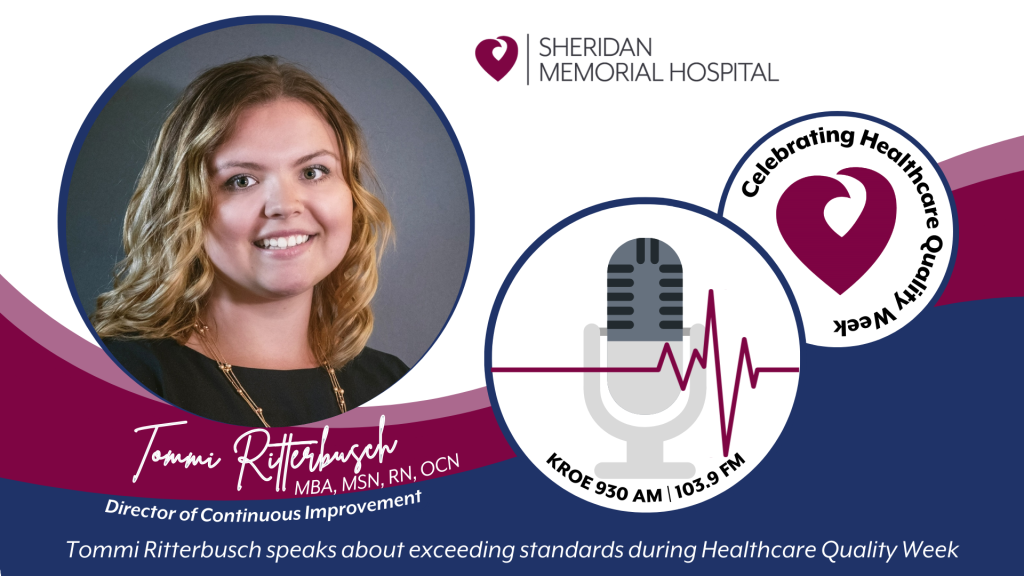
Listen to what Kelly Lieb, DMSc, PA-C, Director of Patient Experience, and Teara Leibee, BSN, RN, and Emergency Department/ICU Supervisor, share about themselves, the patient experience, and patient responsibilities.
Welcome to Sheridan Memorial Hospital
1401 West 5th St. Sheridan, WY — 307.672.1000
Listen to what Kelly Lieb, DMSc, PA-C, Director of Patient Experience, and Teara Leibee, BSN, RN, and Emergency Department/ICU Supervisor, share about themselves, the patient experience, and patient responsibilities.

Click HERE to read Kelly’s article, “What is patient experience?”
T.R. and Emily (Stone) Shelby married in 1971 and were known for their generosity, love of family and life, and enjoying each day. They especially appreciated classical music, the arts and travel. Emily was a pharmacist at the V.A. Hospital in Sheridan for more than 20 years, with an undeniable tie to healthcare and ultimately a passion to help others. T. R., a railroad engineer, is known to think creatively and look for unique opportunities to develop the community around him and help people live their best lives. They were a dynamic team that spent much of their lives in Sheridan, Wyoming, with a bit of movement after retirement. After time spent in the Jackson Hole area, T.R. returned to live in our community in 2022 and reached out to the Sheridan Memorial Hospital Foundation about a special memorial gift for his wife, Emily, who passed away in November 2020.
Emily treasured her time with the people she loved, especially her wonderful family and friends. These shared times and the memories made will stay with her loved ones, and T.R.’s generosity will continue her legacy here in Sheridan County. From his generous contributions to the beautiful Chinese wood carving collection of Ling Tung now on display for all to enjoy, T.R. continues a legacy of giving and support for our mission in providing excellent patient-centered care, right here at home.
T.R. Shelby continues his strong tradition of giving through a matching gift opportunity which will support Behavioral Health and our hospital’s Growing for You Campaign. This $100,000 challenge gift not only supports Sheridan Memorial Hospital’s investment in Behavioral Health, but the subsequent repurposing of space to better serve our patients in numerous departments throughout the hospital. “From our obvious ties to Pharmacy, to the children needing care in pediatrics, I know Emily would be proud to not only support these crucial efforts, but hopefully inspire others to get involved as well.”
“Working with T.R. on hospital efforts is a gift,” shares Ada Kirven – Director of Donor Relations for the Sheridan Memorial Hospital Foundation. “He thinks creatively and is giving of so much of his time and talents to better our entire community. This matching gift idea for vital healthcare improvements is just another example of his ability to help others. We are excited to announce the gift and opportunity.”
T.R. is committed to supporting our local hospital and he realizes the importance and value of having excellent healthcare close to home. He challenges you to do the same. “To help those we love, when they need it most, is what rural healthcare is all about. It is about our neighbors, friends, family. It is about those that came before us and those that will come after us. It is about making a difference and ensuring everyone has excellent healthcare for years to come.”
By Cathy Bealer, RN, MHA, FACMPE – Chief Nursing Officer at Sheridan Memorial Hospital
National Nurses Week is May 6-12, with the American Nurses Association recognizing and honoring nurses across the United States in the month of May.
The theme this year of “Nurses make the Difference” is very fitting for our nursing staff. Nurses continue to face challenging times with nationwide staffing shortages, growing technology changes, staying current with advances in medicine and the rising demand for care.
Recruitment and retention of the best and brightest nurses will continue to be a top priority for hospitals. I want to congratulate our exceptional nursing teams for their resilience to meet these challenges.
As we reflect upon the past year, we are proud of our nurses’ commitment, expertise and strength in caring for our patients, their families and our community. I extend my genuine gratitude to each of them for the dedication and fortitude they have shown and am proud of the excellent care they have provided to our patients and their families. Our nursing teams have also created the supporting environment for each other, which fosters a collaborative culture exemplifying the true spirit they bring to their profession.
We honor their contributions, and thank them for the difference they make in our patients lives. Organizational excellence begins with people, and our nursing professionals are an integral part of offering patient-focused care. Thank you to all nurses for their devotion and professionalism as we work together to meet the healthcare needs of our community.
NURSES MAKE THE DIFFERENCE! Happy Nurses Week!
Like many people who go into health care, Ashley Bostyan knew she wanted a career in which she could help people. While her career path has evolved, her goal hasn’t changed. She started off as a social worker, then went back to school to become a nurse. Now, she has joined the team at Sheridan Memorial Hospital, working as a nurse practitioner in the Transitional Care Unit.
“I’ve always really enjoyed helping people and interacting with people,” Bostyan said.
She added that the most formative years of her health care career came when she worked in Minnesota at the Mayo Clinic. There, she had the opportunity to see the impact all health care workers have on patients, but also the influence patients have on health care staff.
“It helped me see that the severity of illness and what they are experiencing holds no boundaries,” Bostyan said. “It didn’t matter who they were, where they were from – their race, age or religion. That experience brings out the humanity in all of us and reiterates how precious health and life are.”
Bostyan, who grew up on a ranch in southwestern North Dakota, said she looks forward to serving a smaller community. She noted organizations the size of SMH tend to have higher accountability and responsibility, as the community holds health care employees to a higher standard.
Working in more rural areas is also very rewarding for Bostyan.
“It’s not just a job, but a vocation,” she said. “It’s important to seek out those places where every resource and every opportunity isn’t just around the corner and give back, especially in rural areas.”
Bostyan and her family spent time in the Sheridan County when she was growing up, so she’s familiar with the area. The people in the community and at the hospital represent some of the values she holds dear – putting patient care first, taking care of health care employees and championing community.
And while her path has included many experiences, Bostyan looks forward to working on the Transitional Care Unit at SMH. She noted patients often return home quickly following significant surgeries or illnesses, and she looks forward to helping prepare them for that transition.
“Transitional care is so important because it focuses on promoting different therapies and opportunities for rehabilitation that prepare individuals for their next steps,” Bostyan said. “It helps them to thrive when they return home or to another facility and helps to avoid future hospital stays. There is so much opportunity to do a lot of good.”
In her free time, Bostyan enjoys staying active outdoors, music, reading, and being an auntie to her nieces and nephews. She also volunteers at the nonprofit CHAPS Equine Assisted Therapy.
To learn more about Transitional Care at Sheridan Memorial Hospital, click HERE or visit: https://www.sheridanhospital.org/medical-services/transitional-care/
SHERIDAN – In the spring of 2021, Sheridan Memorial Hospital’s attempts to reduce patient falls centered around reactive solutions to an issue that plagues health care facilities across the country.
After working through a more than yearlong process to reduce falls and increase patient safety, staff across the organization shifted their mindsets. They began focusing on evaluating processes as the means to reduce falls. As a result, the culture within the hospital has become one of continuous improvement and the proactive actions of staff have reduced falls by approximately 15 percent from 2022 to 2023.
This success story from SMH represents just one example of teams working to address concerns across the healthcare organization. Some of the work takes place within one unit, while other projects cross departments and involve many stakeholders.
The creation and utilization of Lean management tools at Sheridan Memorial Hospital served as the mechanism by which teams could work through large, systemic problems without becoming overwhelmed, deterred or delayed. But, the implementation of Lean practices didn’t take place overnight.
The idea of Lean management focuses on increasing quality and efficiency by decreasing wasted resources like time, money or effort. Lean emphasizes constant experimentation as a way of creating a culture of continuous improvement.
Recognizing the positive effects a Lean management system could have at Sheridan Memorial Hospital, the SMH Board of Trustees approved an initial three-year contract with Simpler Consulting in 2018.
Simpler was founded in 1996 on the basic premise that the principles, tools and techniques of Lean apply anywhere work is done. In workshops led by Simpler, Sheridan Memorial Hospital launched a coaching program to help key players within the organization build the necessary skills to move the Lean transformation forward.

Sheridan Memorial Hospital team members involved with the Women’s Health Unit value stream discuss ongoing projects Tuesday, April 2, 2024.
Then, those newly trained leaders began working with teams within the hospital to introduce and teach the Lean system. Early experiments with the management system began in areas such as Internal Medicine and Revenue Cycle.
Approximately one year into the transformation, SMH rolled out the Management for Daily Improvement (MDI) system, a framework that facilitates strategy deployment and engagement with all employees throughout the organization.
While the work being done to make improvements and better the patient experience was well-intentioned, the organizational structures needed further refinement.
“People would go into rapid improvement events and take on big projects, work on them for a week and come out of it with great ideas, but struggled to implement standard work because there was no structure in which to do it,” said Brittany Goodvin, Lean manager.
As a result, the Lean team was tasked with implementing huddles across the organization as a means to implement standard work. The team worked with leaders to outline what huddles would look like. Pilot huddles took place in the Emergency Department and laboratory as well as on the medical/surgical unit. Then the organization began to build on what was learned from those experiments.
“What we needed was 800 problem-solvers,” Goodvin said. “With 800 people working through issues around quality, safety and patient experience, we could get where we’re trying to go.”
As the Lean team and organizational leaders continued developing the Lean infrastructure within SMH, they identified gaps and added tools such as one-on-ones and leader standard work to the team’s repertoire. They learned that in order for Lean to work, SMH needed people to own the goals of the organization, break them down and utilize the proper teams to address them.

Kim George, Women’s Health Unit manager, talks through her team’s continuous improvement work while Lean Transformation Facilitator Collette Miller makes note of countermeasures and action items on Tuesday, April 2, 2024.
When the COVID-19 pandemic began in the spring of 2020, the hospital faced unprecedented challenges. Among them, SMH needed to quickly set up testing and vaccination centers.
This represented an opportunity to not only talk about Lean management systems but use them to move big projects forward quickly. The team utilized Lean management tools to develop and deploy standard work for testing and vaccination centers. Visual management was used to quickly help remind staff of what needed to be done. Tiered huddles allowed for information and barriers to be escalated to appropriate leadership levels, including to chiefs and directors, who during the pandemic comprised an incident command team. That incident command team then became a Tier III within the huddle system and remains in place today.
COVID preparation and management left little other time for improvement work, so instead Lean efforts focused on showing how management tools could be used, then training other managers and leaders to use them.
As the urgency of the pandemic waned, teams returned to value-stream conversations and Lean projects, representing a turning point in the health care system’s Lean journey.
By this point, teams within the hospital had been utilizing daily huddles for months, the tiered huddles had been put into place and directors had begun to embrace the utilization of leader standard work and guiding principles.
“We now have leaders at all levels who embrace the Lean management system and who have the capability and capacity to lead Lean across the organization,” said Mike McCafferty, Sheridan Memorial Hospital CEO.
Over the last year, departments across Sheridan Memorial Hospital have started utilizing Lean tools more effectively. From daily huddles and other MDI to leader standard work, swarms and rapid improvement events — individuals and teams have embraced the use of critical thinking to address problems and achieve continuous improvement.

Sticky notes track some of the work being done within the Lean management system by departments at Sheridan Memorial Hospital. The continuous improvement work is reviewed on a regular cadence by hospital staff.
Deployment of critical strategic goals across departments in 2023 meant each department had a metric for which to aim. As the first iteration of projects wrap up, Sheridan Memorial Hospital staff have much to show for their efforts. The nursing staff on the medical/surgical unit decreased falls by 30 percent. The teams in the Women’s Health Unit created new standard work that allows for women to stay with their newborn and support person following cesarean sections. Big Horn Surgical created new discharge policies and workflows to increase patient education. Urgent Care cut its average “door to doc” time in half, from about 30 minutes to approximately 15 minutes.
While generating buy-in from staff took time, showing that the processes work has built additional capacity.
In the Emergency Department, as an early project the team redesigned its triage process to be more functional for patients and staff. Dr. Luke Goddard said he was initially skeptical of the Lean management system but said through the triage project he saw how processes could be improved for both patients and staff.
“I think over time many people have had similar experiences to what I described above and now have more appreciation for Lean processes and tools to improve their work,” Goddard said.
The managers and staff who have seen these projects through have celebrated and credited the Lean management system with their success. For example, the Women’s Health team said they had wanted to complete the project around recovering cesarean sections for years, but until implementing Lean, didn’t have the tools to do so effectively.
As the hospital continues to grow and adapt to the community’s needs, new projects will require all staff to continue embracing the Lean management system, MDI tools and continuous improvement mindset.
As part of the “Growing for You” campaign, Sheridan Memorial Hospital will develop a facility to provide mental health services — particularly a crisis stabilization center — by the end of 2026. Goodvin, who has led the Lean department, will transition into the role of Director of Behavioral Health.

Teams meet regularly to track projects and ensure all of the necessary people are involved in continuous improvement projects at Sheridan Memorial Hospital.
Just as safety and quality stretch beyond a single department — integrated into every aspect of the organization — the Lean management system will continue to move Sheridan Memorial Hospital forward by living where any work is done.
“We will continue to develop Lean leaders at all levels of the organization,” McCafferty said. “I expect that our managers and directors will build expert knowledge of Lean management as a general requirement of their work. Just as important is the leadership capacity we are building across the entire health system. Staff at all levels — including physicians and clinical care staff, accountants, environmental services staff and administrative staff — are working every day to improve the work they do that aligns with our organization’s strategic priorities.”
A Lean facilitator will remain with the organization, under the umbrella of Tommi Ritterbusch, director of continuous improvement.
“This is a really exciting sign,” Goodvin said. “It shows the maturity and growth of the organization. This is what should happen; it’s a testament to all of the leadership and the commitment to develop problem-solvers throughout the organization.”
Successes, particularly over the last six to 12 months, have shown what Sheridan Memorial Hospital staff are capable of achieving when utilizing the Lean management system. Now, with more than 800 people adopting Lean thinking and working together, continuous improvement has become and will continue to be part of the SMH culture.
Your husband’s surgery is scheduled for 7 a.m., check-in at 5:45 a.m. Pre-op is complete and your loved one has been wheeled back for a procedure. Coffee in hand, now you wait. At 30 minutes you anxiously ask for directions to the café for coffee number two because you can’t sit still. At 60 minutes you get an update that all is going well. Two hours in, the doctor lets you know that everything went as expected and your husband is in recovery; someone will let you know when you can go back and see him. Time to enjoy a treat from the café, a bit more at ease, while you can now calmly converse with someone in the waiting room about the weather and the house they’re flipping on HGTV.
Your MRI appointment is at 1 p.m. and you’re done with physical therapy for that shoulder that’s still bothering you. After check-in, you realize you’re 37 minutes early and have time to spare. You spot a fun new jacket in the gift shop you go in to take a look. Now that you have in hand a few cards for upcoming graduations, a snack for after your appointment, a scarf to gift grandma for Mother’s Day, and the new fun jacket that caught your eye in the first place – you’re ready to checkout. You pay the kind woman who helped you pick out the scarf for grandma and stacked your purchases on the counter. Only 10 more minutes until your appointment, you make note of how grateful you are for the gift shop’s distractions.
The holidays are filled with joy, family, gratitude, stress, anxiety, glitter, more family, more gratitude, more stress. Walking into the hospital for your annual check-up is the last thing you were hoping to do before you and the rest of Sheridan go to Wal-Mart and shop for all the gifts and all the meals. But enter the facility, you’re greeted by friendly faces, warm hellos and festive décor that makes it feel like home, not a cold clinical space. It’s festive and cozy and you feel like you’re walking right into your parent’s house, after being away for a while, and every decoration triggers a cherished memory.
The kind person who provided directions to the café, talked with you about the weather, gave updates on your husband’s surgery, and chatted with you on and off is a Sheridan Memorial Hospital volunteer. The lovely woman who helped you pick your grandma’s scarf, distracted you from your ailment and gave you a place to wander when you needed it is a Sheridan Memorial Hospital volunteer. The beautiful décor, the homey feeling that wrapped you up, the holiday spirit that welcomed you to your annual appointment, is cultivated by Sheridan Memorial Hospital volunteers.
At Sheridan Memorial Hospital, our volunteers are the heart of the organization. They are the teammates who show up without traditional pay, without your typical form of benefits and far earlier for a shift or meeting than most. Every act of service given to our hospital by a volunteer is another chance to further our mission of providing excellent patient-centered care to everyone in our community. You do not need to spend a great deal of time at our hospital to see the tremendous difference our volunteers make on the patient experience here.
I find joy in countless interactions with our team of dedicated volunteers. No matter how big or small, their actions make a difference when they share a part of themselves with all of us. They share so much of their time and talents, incredible stories of their past, hysterical moments from their days, and exude dedication and passion in a way that I will always strive for.
The role of volunteer and development coordinator has been a pivotal change in my life and career. It is not just what brought me back home, but also what keeps me here. I am passionate about the work I’m doing and look forward to standing alongside so many incredible humans who feel the same way about serving our community, every single day. Words can only cover so much for all that volunteers do for the patient experience at SMH and throughout our community. However, to all of our SMH volunteers, I want to make sure you know for every kind gesture you make when no one is watching, every selfless action you take that we will ever know about, every warm greeting you give to the patients, families, staff and guests you encounter, and for every ounce of gratitude you deserve, but someone forgot to pass along, thank you.
To learn more about Sheridan Memorial Hospital’s volunteer program, or to share with us an experience you’ve had with our volunteers, contact Jasmine Slater at jasmineslater@sheridanhospital.org or call 307.675.2620.
Pictured with the new ultrasound equipment in the SMH Women’s Clinic from left are Dr. Elisabeth Scalva, Ultrasound Technologist Sarah Schneider, Dr. Rebecca Franklund and Dr. Lindsay Capron. Not Pictured: Dr. Rebecca Krzyminski, Physician Assistant Tracy Jons, Family Nurse Practitioner Krista Frank and Women’s Health Nurse Practitioner Becky Olson.
The Leona M. and Harry B. Helmsley Charitable Trust has granted $675,676 to The Sheridan Memorial Hospital Foundation to purchase new ultrasound equipment as part of a statewide ultrasound initiative across Wyoming. The initiative includes nearly $13.9 million to help Wyoming hospitals and health centers purchase ultrasound imaging devices and boost sonography and point-of-care ultrasound (POCUS) training opportunities across the state.
“The addition of new and replacement ultrasound equipment supports SMH’s strategic goals and ensures patients and their families receive the excellent care they expect. Up-to-date technology and equipment ensure outcomes meet or exceed expectations by improving patient comfort and the flow of medical procedures,” shares Chief Development Officer Cody Sinclair. Ultrasound is an important tool for rural providers in disease management. This new equipment allows for best practice and support of specialty service lines such as the Women’s Clinic, Emergency Department, ICU, Radiology, and ENT Clinic.
Ultrasound uses high-frequency sound waves to produce images of structures inside the body. This safe, cost-effective tool supports other clinical information to help providers make timely diagnoses and provide appropriate treatment. Highly trained physicians and providers along with clinical support can utilize their training for best or improved patient outcomes and excellent patient care. “The new ultrasound equipment is incredibly helpful in providing excellent patient care. Updated technology enables us to provide more accurate diagnoses, perform procedures with greater precision, and ultimately improve patient outcomes,” shares Dr. Rebecca Franklund of Sheridan Memorial Hospital’s Women’s Clinic. “This has not only enhanced our ability to provide high-quality medical care, but also increased patient satisfaction and overall experience. These additional ultrasound resources are truly a game-changer in delivering excellent patient-centered care.”
Walter Panzirer, a Trustee for the Helmsley Charitable Trust, said the grants will help improve access to quality medical treatment for all Wyoming residents, whether they live in the heart of Cheyenne or Casper or in a smaller rural community.
“Our hospitals and health centers need to stay current with rapidly advancing technology so they can continue to provide top-notch healthcare close to home,” Panzirer said. “These grants help ensure that facilities across Wyoming have the latest and greatest ultrasound equipment and training.”
The grants were announced Thursday during a statewide news conference.
About two-thirds (97) of the 143 devices purchased through the $12.3 million in equipment grants are POCUS machines, which are used by providers at the bed or tableside for immediate assessment of a patient to quickly determine a course of action. The grants will also provide 26 general ultrasound systems and 20 cardiovascular ultrasound systems, which aid in imaging of the heart.
The initiative also includes nearly $1.6 million for the University of Wyoming’s Wyoming Point-of-Care Ultrasound Training Initiative, which aims to enhance patient care across the state by both broadening the scope of training in specialty ultrasound and bolstering access to quality POCUS services.
For over 100 years, Sheridan Memorial Hospital has been serving our community with excellent patient-centered care. Licensed for 88 beds, Sheridan Memorial Hospital is a progressive, state-of-the-art facility in beautiful Sheridan, Wyoming. With sophisticated technology and services beyond what one might expect in a hospital this size, patients can take comfort in knowing they are receiving high-quality care. Our patient satisfaction surveys tell us that we are providing exemplary service to our patients and their families. We are proud of our over 800 experienced and caring employees, 66 physicians, and 36 advanced practice clinicians serving in 25 specialties, who are meeting and exceeding the needs and expectations of Sheridan and the surrounding communities.
The Leona M. and Harry B. Helmsley Charitable Trust aspires to improve lives by supporting exceptional efforts in the U.S. and around the world in health and select place-based initiatives. Since beginning active grantmaking in 2008, Helmsley has committed about $4.5 billion for a wide range of charitable purposes. Helmsley’s Rural Healthcare Program funds innovative projects that use information technologies to connect rural patients to emergency medical care, bring the latest medical therapies to patients in remote areas, and provide state-of-the-art training for rural hospitals and EMS personnel. To date, this program has awarded more than $650 million to organizations and initiatives in the states of Iowa, Minnesota, Montana, Nebraska, Nevada, North Dakota, South Dakota, and Wyoming. For more information, visit www.helmsleytrust.org.
To learn more about this project, please contact The Foundation at 307.673.2418.
The Consumer Product Safety Commission recently issued a notice of recall of Bell Sports Youth Bicycle Helmets. Walmart notified Sheridan Memorial Hospital of the recall via email.
SMH distributed 12 of the helmets during the Third Thursday festival held in downtown Sheridan on July 21, 2022.
According to information from the CPSC, the recall only involves Bell Soquel Youth helmets made prior to September 2021. The helmets were sold in various colors in the U.S. and Canada. The recalled helmet can be identified by the inner helmet sticker, which has the model’s name “Soquel” and “B0726Y” on it. The helmets also have a date code on the white inner label with “MFG: 08/21” or earlier, indicating a manufacturing date of 2021 or earlier.
CPSC said the helmets violate federal safety regulations because the strap anchor can become dislodged from the helmet when sufficient force is applied. The helmets may fail to protect the wearer in the event of a crash, posing a risk of head injury.
If you received one of the helmets at the Third Thursday event July 21, 2022, please contact Sheridan Memorial Hospital’s quality and safety department at 307-672-1081.
For additional information regarding the recall, see cpsc.gov/recalls and search “Soquel.”
SHERIDAN – As Sheridan County continues to grow, the need for outpatient radiology services has also increased. In an effort to meet that need, Sheridan Memorial Hospital will expand its hours for outpatient imaging services beginning April 1, 2024.
Outpatient imaging services include services such as MRIs, mammography, CTs and X-rays.
Appointments for outpatient radiology services will now be available into the evening hours and Saturday mornings. This expanded access allows community members to schedule their appointments at times most convenient for them.
“We know making time for appointments during regular business hours isn’t always easy,” said Chris Bilyeu, radiology manager at Sheridan Memorial Hospital. “By expanding our hours, we aim to increase access to healthcare for area residents and meet the changing needs of Sheridan County.”
As access for imaging services expand, SMH would like to remind patients that they receive their results through the patient portal at the same time as providers. Once the provider has a chance to review the results, contact will be made to discuss the patient’s next step in terms of receiving additional care if necessary.
The announcement to expand radiology hours was first made at the Sheridan Memorial Hospital Board of Trustees meeting Wednesday, February 28.
Sheridan Memorial Hospital patients will experience a delay in billing following a cyberattack that affected hospitals and other healthcare facilities across the country last month.
Change Healthcare, a subsidiary of UnitedHealth Group, processes one-third of healthcare claims across the country. The company was hacked by a ransomware group Feb. 21, preventing millions of healthcare claims from being filed with insurance firms, including the vast majority of those originating from Sheridan Memorial Hospital.
According to Change Healthcare, once the company became aware of the outside threat, it took immediate action to disconnect compromised systems. Sheridan Memorial Hospital also immediately disconnected access to Change Healthcare’s systems and SMH’s cybersecurity partner CrowdStrike did an assessment of the hospital’s systems, determining there were no indicators of a data breach within SMH.
The federal government has since launched an investigation into UnitedHealth Group and Change Healthcare to determine whether a breach of protected health information occurred and review the companies’ compliance with patient-privacy regulations.
Alternate claims processing platforms have been established and are currently being tested, but billing from Sheridan Memorial Hospital will be delayed as systems come back online. SMH anticipates billing to resume at its normal pace by late April. The delay will not impact the amount owed by patients, only the timing in which bills are received.
Additional information regarding the breach of Change Healthcare and its impact on Sheridan Memorial Hospital patients will be released in the coming weeks.
Sheridan Memorial Hospital is an independent community healthcare system with a strong belief in its mission: To serve our community with excellent patient-centered care. The 2023 Community Benefit Report outlines much of the work done in support of that mission.
In fiscal year 2023, which ended June 30, 2023, Sheridan Memorial Hospital provided more than $40 million in unreimbursed care to the community. This amount includes medical assistance provided based on federal poverty limit guidelines, subsidized services, bad debt and the unpaid cost of Medicare and Medicaid.
As Sheridan County continues to grow and demands change, Sheridan Memorial Hospital will continue working to expand access to excellent, patient-centered care close to home.
“As we strive to meet these needs, we have seen areas of growth necessary to provide the added value you and your family deserve and demand,” said Mike McCafferty, Sheridan Memorial Hospital CEO.
Currently SMH staff members are working to expand mental health services for the community with the goal of creating a continuum of care that includes crisis stabilization, inpatient services and outpatient treatment.
Busy schedules can make caring for yourself or your family challenging. To meet the need for convenient access, SMH has expanded its outpatient imaging hours into the evening and Saturday mornings. SMH also has begun work to create a bariatric surgery program, renovate its Emergency Department and Pharmacy, increase capacity for outpatient surgeries and update its patient portal.
As SMH maintains its focus on continuous improvement, additional projects and programs will solidify the healthcare system’s position as your trusted partner in health.
To read the full 2023 Community Benefit Report, see below or download HERE.
By Emily Denney, DO – SMH Primary Care
When I arrived in Sheridan in January 2023, I quickly started seeing patients as a primary care physician. Fairly early on, I had several moms come into the office for evaluation. As I was looking for resources and support for them, I could not find a local group that provided support for postpartum women.
The women I met through my healthcare work were making it through, but wouldn’t it be lovely if there was a support circle of new or not-quite-new moms for them to talk with? The group could give them the opportunity to empathize, share experiences and feel seen. To me, such a group would provide a safety net as women enter or re-enter the world of caring for a new life.
The goal of the group initially centered around post-partum depression, but what I found among new mothers was a wide spectrum of anxiety, depression and overall stress.
Having a baby can be wonderful, but the physical and emotional changes it brings for a new mom, to marriage or partnership, and to other children in the home can be a lot. Then add in all of the other dynamics including financial stress, work stress, etc.
What our community needed was a circle of peers – women who could talk and make friends. In the process of exploring such a group, I was fortunate to find like-minded women in the community. They all agreed we needed such a group and offered to help develop a format and get the program started.
We have had several meetings since starting the new group in November.
We have talked about stress management, boundary setting, sleep and our birth experiences. Going forward, we plan to talk more about self-care, relationships with family and partners and how they change, returning to work, choosing a child care provider and how our own childhoods shape our parenting. We may have some guest lectures as well from community counselors, public health and others. Any and all topics are on the table as we go forward.
The experiences of the moms we have met so far have been wide and varied. There have been wonderful stories, inspirational stories and stories that made me want to cry. Several stories also allowed us to laugh.
What I have learned so far is that women are resilient and amazing, and my hope is that this group can support women to realize that as well. As I have participated in this group, I have reevaluated my own postpartum experiences in a new way, and found gems in the midst.
The free Moms Supporting Moms group will meet Wednesday, March 20, and then each first and third Tuesday of subsequent months at 5:30 p.m. at the Sheridan Memorial Hospital Primary Care community conference room.
Learn more about the hospital’s Moms Supporting Moms group at Moms Supporting Moms – Sheridan Memorial Hospital (sheridanhospital.org).
Each year, Sheridan County welcomes thousands of visitors, from families attending youth sporting events and tourists exploring the Bighorn Mountains to the passersby who spend a night in Sheridan on their way elsewhere. On occasion, those visitors encounter unexpected healthcare needs.
One such traveler, Bill Krieg, was driving home to California with a friend after visiting a ranch outside of Moorcroft. The friend’s wife had passed after a battle with breast cancer and the pair had driven east to the ranch to spread her ashes. Krieg and his friend had intended to make the road trip relatively quickly that October. Following the ceremony, they left Moorcroft and intended to spend the evening in Sheridan before continuing on their way.
“We had stopped for dinner in Sheridan and checked into the hotel about 6:30 p.m.,” Krieg said. “For about a week, I had a weird sensation in my abdomen. Kind of a dull feeling. I thought it was strange but dismissed it. By early evening, I was feeling nauseous and said to my friend that I had a feeling I’d be in the ER before the end of the night.”
Krieg was right. He tried to endure, but by about 12:30 a.m. his friend was taking him to the Emergency Department at Sheridan Memorial Hospital.
Upon arrival at SMH, care teams got to work assessing Krieg’s situation. They performed tests and scans, diagnosing Krieg with acute appendicitis. He would need surgery or face the possibility of his appendix rupturing.
By 6:30 a.m. that morning, Dr. Barry Mangus was in Krieg’s room introducing himself and talking Krieg through the surgery. That afternoon, Mangus performed an appendectomy. The surgery went well, and Krieg was on the mend.
“What stood out to me is that what was conveyed to me happened,” Krieg said of his experience at SMH. “I was not wondering. They didn’t overplay the situation. They were upfront and clear.”
In addition, Krieg said, the nursing care was extremely personable.
“The attention and how I was treated – I cannot commend enough the staff and the physicians who were assigned to me,” he said. “I couldn’t have asked for better care.”
Upon arrival at the hospital, Krieg had told the SMH care team that he was on a road trip, and that he and his friend wanted to get moving again as soon as possible. Dr. Mangus explained the risks, particularly of developing a blood clot due to sitting for extended periods of time post-surgery, but outlined a safe plan that would allow the duo to get back on the road and on their way to California.
By 6 p.m. that evening, about 16 hours after arriving at the SMH Emergency Department, Krieg had been discharged from the hospital and the next morning he continued the drive back to California.
Krieg has worked in the healthcare industry for 40 years, but he noted his experience in Sheridan far exceeded his expectations.
“I have gone through other surgeries elsewhere, and it was far more complex in terms of scheduling and processes,” he said. “The whole experience in Sheridan was extremely personal. You can tell they are all good, caring people who are not just doing their jobs, but being informative and communicative. It was pretty extraordinary.”
While few tourists visiting the Sheridan area expect to utilize the health care services provided by Sheridan Memorial Hospital, Krieg said visitors – and locals – are lucky to have such an exceptional hospital and care teams in the community.
Learn more about the hospital’s Emergency Department and Big Horn Surgical by visiting the respective links.
Each year, Sheridan Memorial Hospital employees find ways to give back to the community.
Beyond the hard work of caring for the community in health care, hospital staff also help others beyond their normal job duties.
Here are some of the various efforts that hospital staff and departments participated in or initiated this past year.
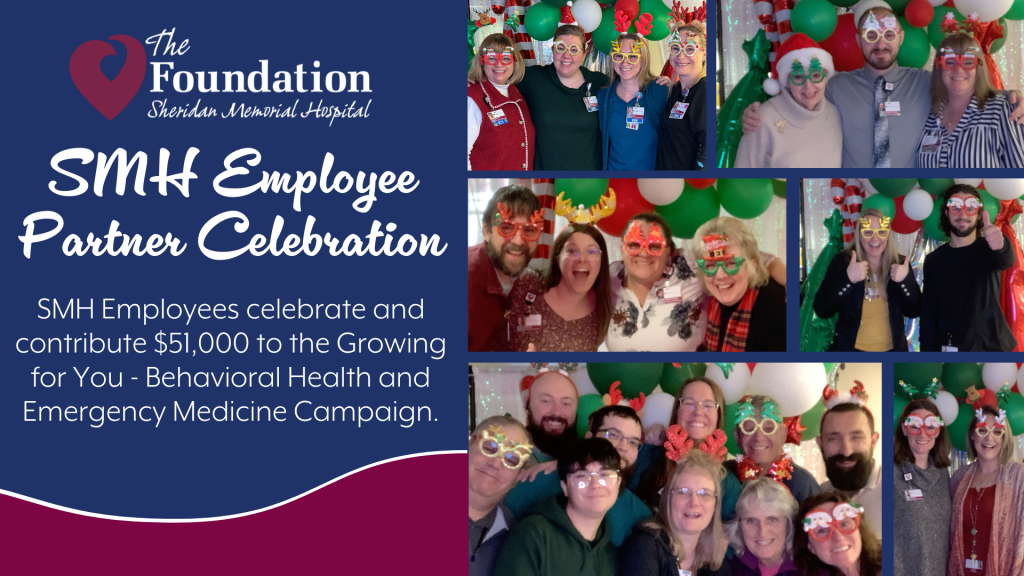
SMH Foundation Employee Partner Program – 568 employee partners raised $47,800 in 2023. After an opportunity to select a project at the Annual Partner Celebration in December, Partners voted to support the hospital’s Growing for You campaign, which includes the addition of a Behavioral Health Unit. Over the past 20 years, SMH Employee Partners have contributed nearly $650,000 to a variety of significant patient care improvement projects at our community hospital.
Patient Access and Admissions Department – The group collected food for Our Daily Bread – a new, local ministry providing food and other items to families in need. Through the generosity of Sheridan Memorial Hospital’s food drive during the month of November, they provided hot meals and additional groceries to several families. The drive also brought in enough shelf-stable items for the group to continue to provide staples to families as needs arise. In addition to the food items, Our Daily Bread received funds to provide turkeys and fresh produce for Thanksgiving meals.
The Women’s Health Department conducted a large toy drive for Christmas, asking all staff to bring in gifts. The toys were donated to Toys for Tots.
Addiction and Internal Medicine Clinic spearheaded the “Santa Kids” project, for which SMH employees provided gifts for 137 children (up to age 17) of patients in the Addiction and Internal Medicine Clinic for Christmas. Each child sponsored was given a large gift bag of presents including a blanket, hat, gloves, gifts and a stocking. The outpouring of support for this project was amazing and the families were so appreciative.
All SMH Employees – During specified Fridays throughout the year designated as “Jeans Friday” at SMH, employees are encouraged to donate $5 for the privilege of wearing jeans on that day. Nearly $2,000 was raised from this effort, with funds distributed among the following causes:
Human Resources and Nurses — On several occasions throughout the year Human Resources and several SMH nurses have supported high school juniors and seniors from Sheridan, Big Horn and Tongue River by conducting mock employment interviews and HR-related roundtable discussions in preparation for careers of interest.
Urgent Care – The Urgent Care staff “adopts” the Wyoming Girls School students each year. For every holiday, the staff delivers a personalized basket to each girl. It is 100% funded by the Urgent Care staff. They take baskets on Christmas, Thanksgiving, 4th of July, Easter and other holidays. “We get such positive feedback from the staff there and the girls. They send us “Thank You” cards each and every time we do this,” according to Angie Erickson, Urgent Care manager.
SMH Trauma Program – The SMH Trauma team participated in Third Thursday events throughout the summer of 2023. In July, the group focused on seatbelt safety, partnering with the Wyoming Seatbelt Coalition. For August’s event, the team focused on outdoor family safety. Their goal was to teach children how to stay safe on the mountains and wilderness or exploring in any outdoor setting. The injury prevention theme for September was “stop the bleed,” and taught individuals how to control life-threatening bleeding. In addition to Third Thursday, the Trauma Team delivered almost 400 copies of “Clifford Takes a Walk” to kindergarten classes in Sheridan County to teach about pedestrian safety.
Primary Scare – Our Primary Care clinic held Primary Scare at the Gould Street location just before Halloween and gave 700 trick-or-treaters all kinds of treats and hosted a haunted house.
Welch Cancer Center – The Cancer Resource Center gave out wigs and other items free of charge to local people battling cancer.
SMH Kozy Korner Gift Shop Volunteers — As part of their annual “Gifts of Kindness” project, our wonderful volunteers gave out 36 neck pillows to patients who were in the hospital on Christmas Eve along with a few special baby gifts to new parents and babies in Women’s Health.
Meet Dr. Erin Henderson and listen to what she shares about
preventive healthcare and why it is essential to excellent health.

To learn more about Dr. Erin Henderson and Sheridan Memorial Hospital’s Primary Clinic, visit the respective links. To schedule an appointment with a Primary Care provider, call or text 307.675.2690.
We’re often asked who is The Sheridan Memorial Hospital Auxiliary. The SMH Auxiliary was founded in 1945 with a single purpose in mind – to make a positive difference in the lives of the patients and the hospital itself. This unique group of individuals comes together, day after day, to support our mission, the staff, patients, and the community that we live in. At the heart of the Auxiliary’s mission is their unwavering commitment to ensuring that every patient feels cared for during their stay at Sheridan Memorial Hospital.
The Auxiliary’s efforts range from fundraising to volunteering their time, all directed toward supporting and enhancing the hospital’s services. They understand that a hospital visit could be a daunting experience, and thus, they embark on various initiatives to create an environment of warmth, kindness, and comfort.
These volunteers ensure that the traditions of our hospital live on through Trees of Love and 5-year-old Birthday parties. They presently gift patients of all ages with baby books, scrubby bears, or Gifts of Kindness during the holidays to provide comfort during their stay. They raise funds through all their projects and donate tens of thousands of dollars and volunteer hours to ensure a future for your community hospital. Since their founding almost eighty years ago, this group of volunteers and leaders have financially supported nearly every department and project at Sheridan Memorial Hospital.
In supporting the auxiliary, we become catalysts for kindness and provide excellent patient-centered care, right here at home. Each contribution to their efforts grows their ability to enact meaningful care. Supporting the Auxiliary isn’t merely about writing a check or attending an annual event; it is about becoming an integral part of our efforts to instill comfort and healing in our patients and the entire community.
We invite you to join us in supporting The Sheridan Memorial Hospital Auxiliary by mailing the form found here and returning it to The Auxiliary at PO Box 108, or reaching out to get involved in a way that best fits you.
For more information contact us by calling Jasmine Slater – Development Coordinator at 307.675.2620 or emailing jasmineslater@sheridanhopsital.org. Together, we can create a ripple of compassion that will touch the lives of countless individuals.
By Dr. Allison Dawson, internal medicine physician at Sheridan Memorial Hospital’s Internal Medicine Practice.
If you could provide comfort to your loved ones in a time of pain or sadness, would you? Making decisions about your own health care and medical decisions now, you can prevent your children, spouses or friends from having to make big decisions that cause uncertainty and stress.
Allowing for peace of mind is a gift not given often in life and it is often not thought of by healthy individuals who feel “old age” is still years away. But the gift is one you can give by preventing thoughts such as, “What would they want?” or “We never talked about it.” But at any age of adulthood, you can prepare this gift by simply filling out paperwork and having a few conversations.
Every person has different values and wishes in regards to their medical treatment. No decision is right or wrong, as they are unique to each individual. There are many ways to document your preferences. The documents I believe are the most helpful are a Durable Power of Attorney for Health Care (DPOA-HC), a Living Will and Physician Orders for Life-Sustaining Treatment (POLST).
DPOA-HC
This form allows you to designate who should make medical decisions if you are not able to speak for yourself. This should be a person you are close to, and someone with whom you have discussed your wishes. If you do not designate a specific person, there is a pathway that will be legally followed. In Wyoming this pathway is as follows: a spouse (unless legally separated), an adult child, a parent, a grandparent, an older sibling then an adult grandchild. If this is not a reasonable decision maker pathway for you, a DPOA-HC is an important document.
For example, if your adult daughter is working as a climbing guide on Mt. Everest, she may not be a good option if you require medical decisions to be made in a timely manner. In this scenario, you may wish for your older sister, who happens to be a registered nurse and is knowledgeable about health care and your wishes, to make medical decisions on your behalf if you are unable.
Living will
This is one of the most commonly recognized forms of advanced directives. This is a document detailing specifics regarding medical treatments toward the end of life. One of the most common living wills you may have already heard of is known as “Five Wishes.” This format is written in plain language, and covers your personal, spiritual, medical and legal wishes.
POLST
This is a form that clarifies your wishes in regard to medical treatments, especially life-sustaining treatments, that are honored by health care professionals across settings, whether at home, in a hospital or an assisted living facility. This form includes preferences for attempts at resuscitation, medical interventions, artificial nutrition, medical conditions and patient goals. You may complete a POLST with a health care provider such as a physician, nurse practitioner or physician assistant. It is important to note, though, emergency medical services are legally required to attempt resuscitation unless they have access to your wishes. If it is your wish that EMS not attempt resuscitation, ID bracelets with your wishes can be worn to prevent medical treatment that is not aligned with your values.
While medical care toward the end of life can be stressful, there are things we can do now to make that process less painful for all involved.
I encourage you all to speak with your primary care provider about these documents and discuss them based on your individual health care needs.
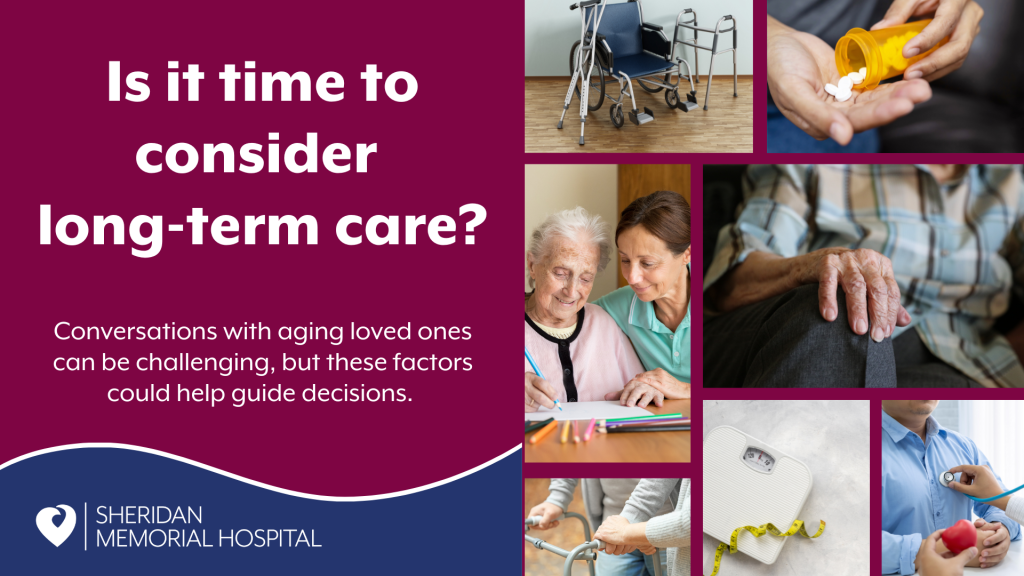
Dr. Allison Dawson is a physician with the Internal Medicine team at Sheridan Memorial Hospital. She is trained in palliative care and hospice medicine. If you would like to make an appointment with Dr. Allison Dawson, call or text 307.675.2650.
Sheridan Memorial Hospital (SMH) has been recognized as one of the Top 100 Rural & Community Hospitals in the country for 2024, according to The Chartis Center for Rural Health. This is the ninth year in a row SMH has earned this honor.
More than 800 hospitals were included in the study, with the Top 100 list developed using the Chartis Rural Hospital Performance INDEX®. The index assesses performance utilizing 37 independent indicators across eight areas of performance including quality, outcomes, patient perspective, cost, charges and finance.
“I am proud of the expertise and commitment of our medical staff, our clinical care teams and all of our supporting staff in all aspects of our health system,” said Mike McCafferty, Sheridan Memorial Hospital CEO. “Every day they create a culture demonstrating our shared principles of respect for every individual, continuous process improvement and alignment across all areas of service. This shapes the environment in which we are able to provide value and an outstanding experience for our patients. Their commitment to these principles helps us continually strive for operational excellence.”
Now in its 14th year, the Chartis Rural Hospital Performance INDEX® is leveraged nationwide by rural hospitals, health systems with rural affiliates, hospital associations, and state offices of rural health to measure and monitor performance across a variety of areas impacting hospital operations and finance.
“During an era of profound uncertainty for rural healthcare, the Top 100 rural hospitals continue to provide a unique lens through which we can identify innovation and inspiration for how to deliver high quality care to increasingly vulnerable populations,” said Michael Topchik, national leader for The Chartis Center for Rural Health.
Learn more about the hospital’s awards and accomplishments at https://www.sheridanhospital.org/about-us/awards/.
On Wednesday, December 14, 2023, Sheridan Memorial Hospital Foundation hosted their annual holiday breakfast to honor and celebrate Employee Partners for their contributions to the hospital’s Foundation. During the event, Partners vote to fund a strategic project in the hospital’s area of greatest need, with the monies accumulated over the past year. In 2023, 478 employee partners participated in this unique philanthropic program and donated $47,806 through biweekly payroll deductions.
This year at the Annual Partner Celebration, Employee Partners voted to support the hospital’s Behavioral Health Campaign. Healthcare for our community continues to grow and diversify. To meet these critical needs, Sheridan Memorial Hospital is developing a Crisis Stabilization Unit to create a separate physical environment to better address the behavioral and mental health needs of patients in crisis.
The idea for Employee Partner giving program began with a few faithful employees in 2004. It has steadily increased year over year, with new employees joining the generous and passionate hospital team. Over the past 20 years, Employee Partners have contributed over half a million dollars toward patient care improvement projects at your community hospital. Their efforts and generosity have opened doors and provided opportunities that will forever shape the trajectory of our organization.
“We are so grateful for our employees each and every day,” expresses Chief Development Officer Cody Sinclair. “The Employee Partner Program is just another example of how our employees contribute to our culture of kindness and care deeply for our patients. The Foundation would not be as successful without our employees’ unwavering commitment to care for our community. We are fortunate to have such a supportive team at the hospital. They create an environment that is not only medically advanced but also filled with warmth and genuine compassion. Every day they are focused on improving the care and experience of every patient.”
For more information about The Foundation, please contact our team at 307.673.2418 or visit sheridanhospital.org/foundation.
Listen as Dr. Joshua Scott Highlights SMH’s 100th Robotic Surgery Milestone.

To learn more about Dr. Joshua Scott, the hospital’s Big Horn Surgical practice, and the Robotic-Assisted Surgery Program at Sheridan Memorial Hospital, visit the respective link or visit SheridanRoboticSurgery.com and Robotic-Assisted Surgery FAQs.