Welcome to Sheridan Memorial Hospital
1401 West 5th St. Sheridan, WY — 307.672.1000
At 91, Charlie Gibson faced some of the toughest challenges of his life all at once. A prostate cancer diagnosis led to the discovery of a malignant kidney, which was promptly removed, leaving him with healing stitches. To make matters worse, Gibson was hit with a severe urinary tract infection that left him bedridden and drained of energy.
But Gibson’s story doesn’t end there — it’s just the beginning of his remarkable recovery at Sheridan Memorial Hospital’s Transitional Care Unit. Gibson affectionately refers to his time in TCU as “the resurrection of Charlie Gibson,” and the team of physical therapists worked with him, pushing him to regain his strength and balance. But, they didn’t just put him through the paces — they made it fun.
Gibson said the highlight of his stay was undoubtedly the decathlon the physical therapists organized for him. Inspired by the Olympic Games that were on TV during his first two weeks at the hospital, Gibson joked that in his next life, he’d come back as a decathlete. The staff took him at his word and set up a series of challenges that included boxing, throwing a javelin (made from a pool noodle), bowling and more. For Gibson, this event wasn’t just a series of exercises; it was a testament to his resilience and spirit.
“I developed the decathlon for Mr. Gibson after being inspired by the fact that even at 91 years old he displayed an unwavering work ethic and determination to overcome any challenge life put in front of him,” said Dawson Eppe, a physical therapy assistant, who worked with Gibson. “I am a firm believer that everyone is an athlete no matter their mobility or age, and the therapy and exercises we choose for treatment should scale with the patient and reflect that.”
The decathlon wasn’t easy. With his recent surgeries and infections, Gibson found the challenges both taxing and exhilarating, but he didn’t back down. With determination and the encouragement of his therapists, Gibson completed every event, even managing to climb the podium at the end. His efforts were rewarded with a gold medal, a symbol of his triumph over adversity.
Throughout his stay, Gibson found the key to recovery was more than just physical therapy. It was about staying positive, listening to happy music, laughing and accepting challenges — even when they seemed insurmountable. These principles guided him throughout his life, from his career with the U.S. Forest Service to his passion for poetry and art in retirement.
Gibson’s story is one of courage, humor and an indomitable spirit. He’s now looking forward to returning home, where he’ll continue his recovery and resume the active life he’s always enjoyed. He knows it will take time to get back into his routine, but he’s ready for the challenge.
For anyone who might find themselves in a similar situation, Charlie has a simple message: “Don’t just lay around. You don’t get well doing that. You need someone to kick you in the butt every day and get you moving.” And if you’re lucky enough to be at Sheridan Memorial Hospital Transitional Care, you’ll have a team of people ready to do just that — with a smile, a laugh, and maybe even a gold medal to reward your efforts.
If you or a loved one have spent three nights in the hospital and still need additional care before returning home, ask your case worker or physician about Transitional Care at Sheridan Memorial Hospital. Our Transitional Care program offers a supportive environment where you can continue your recovery close to home.
Javelin (made from a pool noodle)
Boxing
Bowling
Receiving the Gold
Since the Welch Cancer Center opened its doors in 2013, partnerships within the community and nearby facilities have allowed Sheridan area residents facing a cancer diagnosis to receive excellent patient-centered care close to home. Those same partnerships will now ensure patients in need of radiation treatment will receive the same high level of care while the hospital replaces an essential piece of equipment at the cancer center.
In early September, the Welch Cancer Center will decommission its existing linear accelerator (LINAC), which is used to provide external beam radiation treatment for some cancer patients. In preparation for the project, as the LINAC aged, hospital staff began planning for its replacement, aiming to create the least disruption in care possible and developing a support system for patients who would travel for their radiation treatment.
As patients with new diagnoses are referred to the Welch Cancer Center during this project, they will continue to schedule consultation and follow-up appointments in Sheridan, but will receive the radiation treatment at another facility.
For years, Sheridan Memorial Hospital has had a contract with Billings Clinic for radiation therapy staff including providers, physicists and dosimetrists to provide care in Sheridan. Currently, the team from Billings travels to Sheridan one to two days per week to see patients. This will continue throughout the time the LINAC is being replaced, and patients who travel to Billings for radiation treatment will see the same care team.
“The goal is to create continuity of care by continuing to see patients for consult and follow up in Sheridan,” said Dr. Breanne Terakedis, one of the providers from Billings Clinic who with Dr. John Schallenkamp provides care at Welch Cancer Center. “Patients will continue to see familiar faces in either location in Billings or Sheridan during their treatment schedules.”
During a patient’s initial consultation visit with the Welch Cancer Center, if radiation therapy treatment is needed, the patient will be informed of the LINAC replacement project and options to coordinate care at an outside facility. While many patients opt to receive care in Billings, the Welch Cancer Center team will work with the patient’s facility of choice to coordinate care.
The Sheridan-based care team will coordinate with each patient to determine needs based on the length of treatment required, travel preferences and more. The Sheridan Memorial Hospital Foundation has dedicated resources to assist patients not only with care coordination, but with travel, lodging, meals and other assistance needed or desired. These resources will be offered during the initial consult to patients traveling for radiation treatment, but can be accessed by Welch Cancer Center patients at any time.
“We know any diagnosis can be difficult. Our goal is to support our community members by alleviating financial worries that arise due to travel to receive care,” said Cody Sinclair, chief development officer at Sheridan Memorial Hospital. “Our foundation has resources to ensure treatment and healing can remain the focus for our patients.”
Sinclair, who oversees the foundation, said Comfort Care funds utilized to assist patients during the LINAC project, have existed for several years. For example, in fiscal year 2024, which ended June 30, nearly $10,000 helped provide transportation, mastectomy supplies, wigs and lodging for Welch Cancer Center patients.
“We have an incredibly generous community that has continuously showed a willingness to care for their neighbors, friends and family,” Sinclair said. “The ongoing ability to support individuals fighting cancer is a testament to the longstanding partnerships with neighboring medical teams and our community.”
For additional information about the LINAC replacement project or the Welch Cancer Center, call 307.674.6022 or see https://welchcancercenter.org/.
The Sheridan Memorial Hospital (SMH) Foundation is pleased to announce that 45 deserving individuals have been awarded scholarships during the Foundation’s annual meeting held on July 23, 2024. The scholarships, totaling more than $80,000, will support recipients pursuing further education in healthcare-related fields. Wesley Gosney was recognized as the recipient of the $5,000 Cato Scholar Award for his outstanding achievements and dedication to the field of nursing.
This year’s clinical and nursing scholarships were awarded to staff from 16 service lines and departments within the hospital, highlighting the diverse talents and interests of our growing healthcare team. From certifications and conferences to furthering their education in healthcare through associate’s degrees in nursing, bachelor’s and master’s programs, the large number of applications and recipients this year is another example of our staff’s commitment to caring for others.
Director of Donor Relations Ada Kirven has been developing The Foundation’s Scholarship Program since its inception in 2001. Each year, The Foundation works alongside our hospital leadership and foundation committee members, to ensure awards are utilized for best clinical-care training, ensuring excellent patient-centered care for our community and region.
Both at the annual meeting and through this process, Kirven expressed her gratitude to the donors and volunteers who made these scholarships possible, stating, “We are thrilled to support our staff and individuals as they continue to expand their knowledge and grow in a constantly-changing healthcare industry. Sheridan Memorial Hospital’s caring staff is our greatest asset and these opportunities not only grow the recipients as individuals, but recipients also share their newly acquired knowledge within our teams and entire organization. This investment in our people ultimately drives our mission forward in providing excellent patient-centered care for all.” Ada Kirven also shared, “The generosity of our donors allows us to make a meaningful difference in the lives of these healthcare professionals. With more than 100 donors contributing to educational opportunities for our staff, these gifts are many times a direct reflection of our staff’s work. These gifts are one of the many ways our donors express their gratitude for the care they receive at Sheridan Memorial Hospital. ”
The SMH Foundation is dedicated to supporting the healthcare community through scholarships, grants, and other initiatives. To learn more about our mission and how you could also give a gift of gratitude for your care, please visit sheridanhospital.org/foundation/.
During their annual meeting on July 23, 2024, The Sheridan Memorial Hospital (SMH) Foundation recognized outgoing board directors and welcomed two community members to serve on The Foundation board.
With much gratitude for sharing their time, talents and passion, The Foundation announces the departure of two valued board members, Vicki Jorgenson and Rob Johnson. Both served six years and were instrumental in the growth and success of the SMH Foundation during their tenure on the board. Their dedication to The Foundation’s mission has been a driving force behind our fundraising efforts and community outreach initiatives. The Foundation leadership thanked them for their service and wished them all the best in their future endeavors during the annual meeting.
“Vicki’s been an incredible supporter of our community hospital for decades. She is a quiet connector who cares deeply for our community. Vicki’s legacy of kindness and support will always be a part of SMH,” shares hospital and Foundation Chief Development Officer, Cody Sinclair. “Rob Johnson is a pillar of professionalism and thoughtful leadership. It was an absolute pleasure to witness the Foundation’s success under Rob’s calm and steady leadership as Board President over the last two years,” Sinclair expressed.
The Sheridan Memorial Hospital Foundation is excited to announce the addition of two new Foundation board members – Mikole Bede Soto and Gary Campbell.
Mikole was raised in Sheridan and then attended the University of Wyoming, where she received a B.A. in History and Political Science and a Master’s in History. After receiving her Juris Doctorate degree from the University of Wyoming in 2017, Mikole Bede Soto joined Chapman Valdez & Lansing in 2018 in the Sheridan office.
Mikole finds it important to be engaged in the Sheridan community. Currently, she serves on the Sheridan Chamber of Commerce Board, KidsLife Board, and Museum of the Bighorns Board. Mikole is also a graduate of the 2020-2021 Sheridan County Leadership class. “The hospital is such a pillar of our community. Having excellent healthcare in our community is part of what makes Sheridan so special,” shared Mikole. “I look forward to helping contribute to this asset in our community and ensuring it is here for everyone.”
When able to adventure, Mikole enjoys spending time outdoors with her husband, Austin, daughter, Marley, and their dogs and horses. Occasionally, Mikole teaches cooking classes at her family’s business, Verdello.
On behalf of the entire Foundation Board & staff, Sinclair highlighted, “The Foundation Board is thrilled to have Mikole join our team. She has a wonderful perspective being engaged in the community around her. Her skills, talents and dedication to serving our community excites our entire team and we look forward to working alongside her.”
Gary Campbell grew up in Sheridan and earned a bachelor’s degree in civil engineering at the University of Wyoming. His career included working with the U.S. Forest Service across National Forests throughout the country as well as leadership positions in Washington D.C. Gary ended his career with the Bureau of Reclamation and oversaw many large water projects across nine states in the Western United States. Gary brings a wealth of knowledge and experience. “Coming back to Sheridan brought out a desire to serve the community that gave so much to me. Having family members who have experienced a lot in healthcare systems, I feel that I can truly help to support and make a difference for others, to ensure that they all have the excellent care they deserve,” says Campbell. “Serving on The Foundation Board is the exact opportunity I was looking for to give back and really connect.”
After a decorated and extensive career, Gary is now retried back in Sheridan, the community he has always called home. Gary is an avid outdoorsman and likes to hunt and fish. You can often find Gary with his family: wife – Cindy, his son Justin and wife Katie also of Sheridan, and visiting daughter Ronni in Reno, Nevada.
“When you meet Gary, he exudes professionalism and kindness. His passion and thoughtfulness are always apparent and just what we look for in a board member. He has so much to offer our hospital and Foundation. Our team is looking forward to sharing and learning from him,” expressed Sinclair.
The Foundation team is inspired by the leadership, passion, and community spirit of our board. The Foundation welcomes Mikole Bede Soto and Gary Campbell and express gratitude for the involvement and contributions of the other Foundation board members: President Sue Belish, Vice President Wendy Smith, Secretary Yvonne Gatley, Treasurer Chuck Burgess and at-large directors Dr. Bill Doughty, Richard Garber, Ryan Franklin, Rosemary Rieder and Dr. Joshua Scott. Their diverse backgrounds and dedication to service will strengthen efforts to support Sheridan Memorial Hospital in providing exceptional healthcare to our community.
To get the most up-to-date Foundation information and learn more about The Board of Directors, visit sheridanhospital.org/foundation or call our Foundation Team at 307.673.2418.
SHERIDAN – A remodel of the Sheridan Memorial Hospital Emergency Department began Monday, Aug. 12, affecting how individuals seeking care will enter the facility.
The main entrance to the SMH Emergency Department will be closed for approximately four weeks during construction. During this time, those seeking care in the Emergency Department should continue to park in the lots located off Fifth Street near the Emergency Department, but will enter through the doors located under the building’s large awning. Signage will be in place to help direct patients to the correct entrance.
SMH staff have emphasized the importance of not parking or leaving vehicles unattended under the awning or along the road that loops under the awning. This area is reserved for local emergency services transporting individuals to the Emergency Department.
The work that began Aug. 12 is the first phase of the Emergency Department remodel and focuses on the entry to the facility. The second phase of the project, expected to begin in approximately one month, will relocate the registration desk in the Emergency Department, update the waiting room and add more triage rooms to the department. The main entrance to the Emergency Department will reopen to the public during the second phase of the project.
Later this year, additional work will be completed in patient care areas of the Emergency Department to update features such as lighting and flooring.
The Emergency Department construction project is part of the hospital’s Growing for You campaign. Additional information on the project can be found at sheridanhospital.org/growing-for-you/.
SHERIDAN – In an effort to expand access and provide additional opportunities for community members, Sheridan Memorial Hospital will open a new clinic on the south end of Sheridan this fall.
“As Sheridan continues to grow, we are working to make sure taking care of your health is as easy as possible,” said Mike McCafferty, CEO of Sheridan Memorial Hospital. “By adding a clinic on the south side of Sheridan, we are creating opportunities for convenience in a hub of our community.”
The clinic, SameDay Health & Imaging, will include an imaging center, laboratory draw stations and same-day care.
The clinic is expected to open this fall at 1470 Sugarland Drive.
There’s something special about Wyoming. That’s why Dr. Abigail Turnbough knew she would return to the state to care for patients and why she recently joined Sheridan Memorial Hospital’s Rheumatology Clinic.
Turnbough grew up in Casper, Wyoming, before attending medical school in Colorado. She did her clinical rotations in Casper, then a residency in Denver and a fellowship in Omaha. The plan, though, always included a return to Wyoming.
“There is a special sense of community in the people who are from Wyoming that you really don’t see anywhere else,” Turnbough said. “I like how the community comes together to support its members and I appreciate the attitudes of the people who live and work in Wyoming. Wyoming is full of hardworking people who deserve great care.”
Turnbough’s interest in rheumatology sparked during her time volunteering at a nursing home. She had been speaking with one of the female residents, sharing that she planned to become a doctor one day.
“She told me, ‘You have to be a rheumatologist and come back to Wyoming,’” Turnbough recalled. “She talked about how hard it is to see specialists and the travel burden that usually entails and her story resonated with me.”
Now, Turnbough treats patients with a variety of diseases, including rheumatoid arthritis, gout, lupus, psoriatic arthritis and other inflammatory and autoimmune diseases that affect the body’s musculoskeletal system. She’ll work alongside Dr. Benjamin Widener, who opened the Rheumatology Clinic at Sheridan Memorial Hospital in 2020.
Turnbough said she considers herself a “pretty straight shooter,” who aims to treat people as she would want to be treated.
“I like to put a lot of time and energy into building relationships with patients,” she said. “Rheumatology often is filled with patients I will follow and treat for a lifetime. Patient trust and the ability to communicate without patients worrying about being judged or reprimanded is something I work to facilitate. Rheumatologists often have to cycle through medications to find one or a combination that works and it is important for the patient to know you are on their side and will work with them to reach the correct diagnosis and/or treatment plan.”
Having grown up in Wyoming, Turnbough is familiar with Sheridan. Her husband hails from Broadus, Montana, and the couple would meet up with his family in the Bighorn Mountains for camping trips regularly.
Now that Turnbough lives in Sheridan, she said she looks forward to continuing to explore the Bighorns on hiking and camping trips. In her personal time, she also enjoys reading, painting and hunting.
To learn more about the Rheumatology Clinic at Sheridan Memorial Hospital, see https://www.sheridanhospital.org/medical-services/clinics/rheumatology/.
Earlier this year, Sheridan Memorial Hospital kicked off the construction work planned as part of its Growing for You campaign, which includes updates to several areas of the hospital and will culminate in the opening of a new behavioral health unit in 2027.
In July, contractors completed the first phase of the Growing for You campaign – the completion of a new space for the hospital’s internal pharmacy. The pharmacy team moved into its new space the week of July 15, allowing contractors to turn their attention to the next phase of the project.
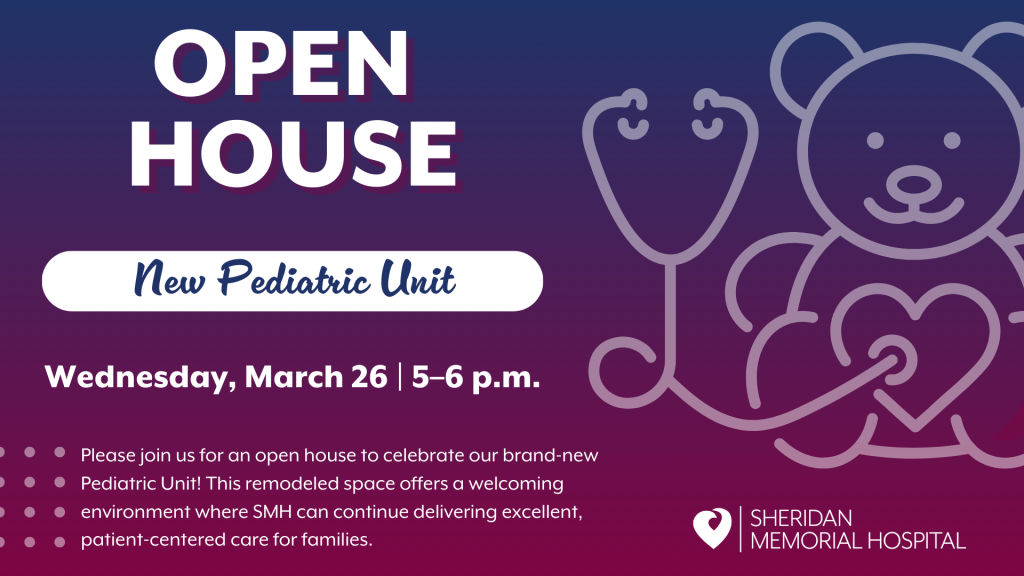
Demolition of the space formerly occupied by the pharmacy team has begun, as construction crews work to transform the space into Sheridan Memorial Hospital’s new pediatrics unit. With the next phase of the Growing for You project underway, the south hallway leading from the main entrance to the lobby nearest patient rooms has been closed. Visitors should look for temporary wayfinding signs highlighting the alternative route to patient rooms.
In addition, noise from the construction may be noticeable to visitors and patients, though crews and hospital staff are working to minimize noise impacts.
The pediatrics unit is projected to be completed by early 2025.
To learn more about the Growing for You campaign and the hospital’s plans to continue meeting the community’s healthcare needs, see sheridanhospital.org/growing-for-you.
SHERIDAN – Many individuals with serious health conditions manage their care at home. For example, individuals with diabetes often inject their own insulin and utilize lancets to test their blood glucose levels. This and other medical care at home can create medical waste requiring proper disposal.
Where does this medical waste go? The City of Sheridan Landfill, located at 83 East Ridge Road, accepts medical waste including sharps such as syringes.
The City of Sheridan Landfill asks that all sharps be placed in a hard container, such as a plastic soda bottle or a sharps container. For commercial customers, staff at the landfill ask that all sharps be in a sharps disposal container. For safety reasons, landfill employees will not touch the waste. Instead, those dropping off sharps or other medical waste will cross the scales and notify the attendant of the items for disposal; landfill staff will then give instructions and direct individuals to the drop-off location.
The U.S. Food and Drug Administration recommends individuals do not throw loose needles or other sharps in the trash or flush them down the toilet. In addition, the FDA notes sharps are not recyclable and therefore should not be put in recycling bins.
Neither Sheridan Memorial Hospital nor its clinics accept sharps for disposal from the public.
For additional information regarding the proper disposal of sharps with the City of Sheridan Landfill, call the landfill at 307.674.8461.
SHERIDAN – Living in the West, most have become accustomed to the haze that fills the skies in the summer months. Over the last week, though, as people awoke to find ash on vehicles in Sheridan and neighboring communities, the conversations around wildfires and the smoke they produce have generated questions and concerns regarding the health implications.
You may first recognize the smoke in the air using your sense of smell or sight, but a more accurate way to check the air quality in your area is to look it up online. Most of the popular weather apps include an air quality report and websites like fire.airnow.gov allow you to check the air quality and see where the smoke is coming from and how far the smoke plumes stretch.
What you do with this information depends on several factors, including your personal risks and health history.
“While the smoke in the air can be an annoyance for all, those with chronic illnesses, older adults and children are most at risk for serious health concerns due to smoke inhalation,” said Dr. Juli Ackerman, a physician with Sheridan Memorial Hospital’s Internal Medicine Clinic.
Wildfire smoke can exacerbate respiratory conditions such as asthma and chronic obstructive pulmonary disease. Inflammation caused by breathing smoke can also affect individuals with chronic conditions like diabetes, kidney disease or heart disease. Those with underlying or chronic health conditions should visit with their healthcare provider to make a plan for dealing with poor air quality, managing symptoms and ensuring their safety.
“Living in the West where wildfires are fairly common, it’s important to have a plan in place for how you will keep yourself safe from potential impacts of wildfire smoke in our community,” Dr. Ackerman said. “It’s also important to note that even if the smoke seems to clear from the air, symptoms and health concerns arising from that smoke may linger or develop over several days, so it’s important to remain on guard throughout the fire season.”
Young children and older adults are particularly sensitive to smoke in the air. Children’s lungs are still developing, while older adults often have weakened immune systems – leaving both vulnerable to symptoms such as sinus irritation, shortness of breath, wheezing, headaches or coughing.
If air quality is poor, or if you have increased risk, limit your time outside as much as possible. In particular, keep activity levels like outdoor exercise to a minimum. If you do go outside, consider wearing a high-quality mask like an N95; surgical masks and wet bandanas or cloths are not very effective in keeping the smoke particles out of your airway. In addition, change your clothes when you get home to avoid bringing lingering smoke particles into your living space.
In your home, if possible, keep your windows and doors closed. Air purifiers can help filter out some of the particles from wildfire smoke. Air conditioners can also help, but ensure any window units have a tight seal around them, and if you utilize central air, consider switching the system to recirculate mode to avoid pulling in the smoky air from outside.
Contact your healthcare provider if you begin experiencing symptoms such as shortness of breath, trouble breathing or excessive coughing, and as always, call 9-1-1 or go to an emergency department if you are experiencing chest pain or if you think you are having a heart attack or stroke.
Talk to your primary care provider about your healthcare concerns. If you don’t have one, check out Sheridan Memorial Hospital’s Primary Care practice or call or text 307.675.2690.
Sheridan Memorial Hospital recently received recognition for its hospice services, recognizing the program among those across the nation that go above and beyond in providing high-quality care for patients and compassionate caregiver experiences.
HEALTHCAREfirst, a provider of survey programs for home health and hospice agencies, conducts the annual review of hospice programs, acknowledging the highest performing agencies by analyzing the performance on the Hospice Consumer Assessment of Healthcare Providers and Systems survey satisfaction and quality measures.
To be considered for this award, HEALTHCAREfirst considers survey respondent’s willingness to recommend the hospice program alongside 23 additional quality indicator measures. These scores are then compared on a question-by-question basis to a national performance score calculated from all partnering hospice programs contained in HEALTHCAREfirst’s database.
“We began our annual Hospice Honors Award program more than 10 years ago as a way to highlight those agencies that are truly leading the way in providing and demonstrating quality patient care,” said Jeremy Crow, head of RCM and CAHPS Survey, Home Health and Hospice. “We congratulate Sheridan Memorial Hospital on this recognition and are so proud and honored that they have chosen to partner with us in helping drive success for their agency.”
Sheridan Memorial Hospital’s hospice program includes basic medical care with a focus on pain and symptom control; medication, medical supplies and equipment as needed and appropriate; support with psychological, emotional and spiritual end-of-life experiences; respite care for caregivers, family and others; and bereavement support and counseling.
The SMH hospice program includes approximately 15 staff and nearly 40 volunteers.
To learn more about Hospice or becoming a Hospice Volunteer, please click HERE to visit the Sheridan Memorial Hospital Hospice page.
By Alaina Bergstrom, MSN, RN, CCRN-K – Emergency Department and Intensive Care Unit Manager at Sheridan Memorial Hospital
Children have left the classroom for the summer. Families are spending more time outside. Implementing some basic summer safety measures will help reduce your risk of spending valuable sunny days in an urgent care, emergency room or doctor’s office.
Summer means sunshine, but it also means bugs, so there are many ways you can protect your skin this season. Lather on sunscreen with an SPF 30 or higher, and reapply frequently if you plan to spend extended time outside. Unprotected skin can burn quickly, which can cause long-term and immediate damage.
If you’re spending extended time outside, you should also be prepped to protect yourself from bugs. Check yourself for ticks, which can spread Lyme disease, and if you have an allergy to bees or other insects, be sure you have your emergency treatment with you before leaving the house.
There is no one-size-fits-all for daily water intake, as recommended levels typically depend on your activity level, health conditions and other factors. Basic recommendations, though, include drinking water throughout the day, and increasing intake based on how much time you spend in the heat, exercising or sweating. Knowing the signs of dehydration can also help you avoid danger — dry skin, headaches, dizziness, fatigue, muscle cramps and dark urine are among the symptoms. If you’re looking to add a little flavor to your water intake, eat foods that have high water content such as watermelon, cucumbers, celery, tomatoes and many others.
Bicycle rides, rollerblading, boating, swimming and hiking — the recreational opportunities lure individuals and families outdoors all summer long. Safety gear helps avoid tragic incidents. Be sure you and your loved ones wear life vests, helmets, knee and elbow pads, shoes and other appropriate protective gear for each activity. Just as important is ensuring those safety measures fit appropriately. Oversized or improperly worn safety gear can reduce their effectiveness and create additional hazards.
Whether you’re traveling with children or pets, be sure to check your car’s backseat at each stop. According to the National Weather Service, the temperature in a vehicle can rise 20 degrees in as little as 10 minutes, and 50 degrees in an hour. Each time you make a stop, follow the NWS advice: Beat the heat, check the backseat!
We were excited to have kicked off the Downtown Sheridan Association’s season of Third Thursday events on June 20. Representatives from Sheridan Memorial Hospital were on site, handing out sunscreen and life vests to help keep you and your family safe this summer. Thank you to all who stopped by, said hello, and learned more summer safety tips.
What does labor and delivery look like? What is an epidural? How will I know how to help my baby breastfeed? These are all questions new and expecting moms find themselves wondering. In order to help answer those questions and the many others that arise during and after a pregnancy, Sheridan Memorial Hospital offers childbirth education classes to help expectant parents learn what is ahead of them.
“We want to help parents have the very best start with their baby. Parents may have an idea of what to expect, but attending these classes helps bring their birth plan to life – alleviating fears and misconceptions. The better-prepared parents are for the birth and the more they know what’s ahead of them, the more they will be able to relax and enjoy their new baby,” according to Josie Fagerland, Women’s Health Registered Nurse and Prenatal Class instructor.
Specially trained nurses teach two different classes year-round at no charge. They discuss common fears, concerns, problems and myths surrounding the wonder of childbirth. There is a specific focus on labor, birthing and breastfeeding. Since the classes are held throughout the year, expectant parents can attend a class whenever it is convenient for them. Often, they choose to attend when they are in the second or third trimester of their pregnancy. In addition, Sheridan Memorial Hospital staff have partnered with other community organizations to create a Moms Supporting Moms peer support group.
In the Prenatal Class, a nurse talks expectant parents through the stages of labor, vaginal and cesarean delivery as well as how to care for themselves after the baby is born. Some of the topics covered include: changes your body might go through, when to come to the hospital, what to bring, signs of labor, pain management, cervical exams, fetal monitoring and what to expect during labor. The class culminates with a tour of the hospital’s birthing unit, which provides an opportunity to meet the caring, compassionate staff in the Women’s Health Department.
The Prenatal Class is typically held on the first Monday of each month from 5:30-7:30 p.m. in the hospital’s Outpatient Center second floor conference room located at 1333 W. Fifth St.
In this two-hour class, a Certified Lactation Counselor (CLC) from the Women’s Health team talks through the basics of breastfeeding and care of the newborn. Though breastfeeding is natural it is not always naturally easy. Latching a baby onto the breast and caring for a newborn is learned and requires an immense amount of support early in the process. The CLC will provide clear and accurate breastfeeding and newborn care information for the “soon-to-be” mother and her support, allowing the baby’s family to feel better prepared and more empowered to care for themselves and their newborn(s). The class covers breastfeeding expectations, strategies for success and how to avoid or navigate complications. Topics include lactation processes, latch and latching techniques, nipple and breast care, breast pumps and pumping, diet considerations, transition of the newborn after delivery, newborn behavior, newborn screenings, elective procedures, diaper care and basic car seat safety.
The Breastfeeding and Newborn Care Class is typically held on the third Monday of each month from 5:30-7:30 p.m. in the hospital’s Outpatient Center second floor conference room located at 1333 W. Fifth St.
Bringing home a new baby often brings joy, and sometimes new parents also experience feelings such as anxiety, sadness and being overwhelmed. These feelings can be isolating and difficult to manage.
In order to support new mothers, Sheridan Memorial Hospital has partnered with other community entities to organize Moms Supporting Moms, a facilitated peer group. Topics discussed include birth stories, role transitions, how to keep maternal guilt from sabotaging self care, stress management, communication with family members, choosing child care providers and returning to work.
Moms Supporting Moms meets the first and third Tuesday of each month from 5:30-6:30 p.m. at Sheridan Memorial Hospital’s Primary Care community conference room, located at 61 S. Gould St.
Pre-registration for the childbirth education classes is required. To sign up online for either class, go to sheridanhospital.org and search for “I’m having a baby.” Once you sign up, an instructor will contact you via email before the class with instructions. Classes are free and recommended for parents expecting their first baby and as a refresher class for those parents expecting again. Both partners are encouraged to attend the classes, which are held in the Hospital’s Outpatient Center second floor conference room at 1333 W. Fifth St.
Learn more about our Women’s Health Department, take a video tour and sign-up for classes HERE, or by visiting https://www.sheridanhospital.org/medical-services/womens-health/im-having-baby/


Listen to what Dr. Emily Denny and Jazz Scott share about services available for new moms, including prenatal and lactation classes in a facilitated peer group.

Learn more about our Women’s Health Department, take a video tour and sign-up for classes HERE, or by visiting https://www.sheridanhospital.org/medical-services/womens-health/im-having-baby/
By Meghan Reinemer, RN – Diabetes Education Coordinator and Susan Kreager, RDN, LD, CDCES – Diabetes Education/Dietician Coordinator at Sheridan Memorial Hospital
Summer is officially here. Let’s check in with ourselves and do a refresh that can benefit all of us, regardless of our health history.
First, how much water are you drinking? How much should you be drinking? There are many factors to take into account: age, gender, activity level and energy expenditure. On average, men should drink 15.5 cups (3.7 liters) and women should drink 11.5 cups (2.7 liters) of water a day. This should increase with warmer temperatures and increased activity. Also, if you are someone who goes up to the mountains in the summer, our bodies lose water faster at higher elevations, so we need to drink more than we would in town.
If you don’t like water, you can always try iced tea, or having fruit infused water for a tasty treat. Drinks like Crystal Light, Mio or even Liquid IV are also options, just keep in mind, these products can have additives like sugar and salt.
Next, let’s talk about sleep. On average, adults need 7-9 hours of sleep each night. It’s not always about how much sleep you’re getting though, so also consider how restful your sleep is.
Lastly, let’s talk about fruits and vegetables. Research shows that only one in 10 adults get enough fruits or vegetables daily. What is enough? Five servings of fruit and/or vegetables offer the best amount of fiber and health benefits. Some research suggests dietary fiber can protect against colorectal cancer as well as lower risk of cardiovascular disease. Fruits and vegetables are also excellent sources of antioxidants and phytochemicals, which protect against cancer and support gut health. Produce can be expensive, so try grabbing frozen fruit and make a smoothie. You can throw in some leafy greens and you’ve already have two servings of fruits and vegetables done for the day. Trying to eat more fruits and vegetables can also help us to make other healthy changes in our lives, like starting a garden or going to the farmers markets every week and making friends. Plus, they taste great!
If you are interested in meeting with a dietitian, please call your provider and ask for a referral. A dietitian can help troubleshoot the changes we all face, help with quality of life, and increase longevity. It’s still possible to make changes!
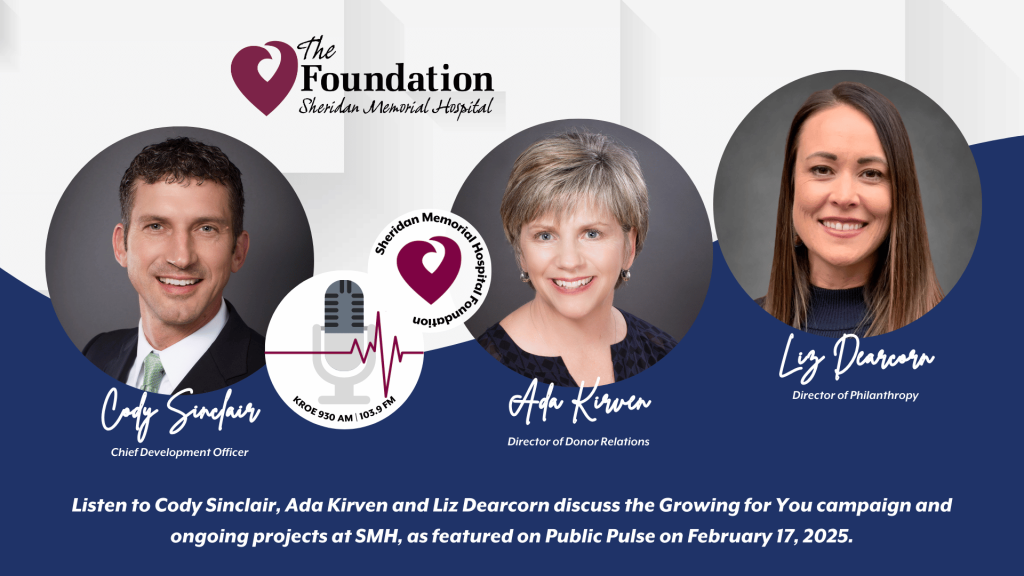
Listen to what Cody Sinclair and Liz Dearcorn share about the Growing for You campaign and ongoing projects at Sheridan Memorial Hospital.

For additional details on The Foundation and the Growing for You campaign, as well as current initiatives at Sheridan Memorial Hospital, please contact us at 307.673.2418 or explore our website at sheridanhospital.org/foundation.
SHERIDAN – Beginning May 20, Sheridan Memorial Hospital patients can now text 307.672.1070 to inquire about copies of medical records.
Your medical records are important and confidential. Text messages to the Health Information Management Department will be processed via the hospital’s secure messaging system, but creates another convenient way for patients to request records regarding their care at SMH.
Through the texting system, patients can initiate requests for the release of information, jumpstarting the process. Depending on the kind of request and the specific needs of the individual, some will still need to make an in-person visit to the hospital’s Health Information Management Department to sign consent forms or other documentation.
Once a text message is sent to the Health Information Management Department, an automated response will be received by the requester, signaling that the SMH team has begun working on the request.
The Health Information Management Department at Sheridan Memorial Hospital is located on the lower level of the main hospital, down the hall from the cafeteria. For additional information regarding the new texting service, please call 307.672.1070 or email HIMrelease@sheridanhospital.org.
By Erik Smith, MD – physician at Sheridan Memorial Hospital’s Emergency Department
For whatever reason, there has been a surge in patients seeking care for dog and cat bite injuries in the emergency department over recent weeks. Maybe it is the weather. Maybe it is the solar eclipse. Perhaps there is an organized movement to expand the doggie swimming days at Kendrick Park. Regardless, many of these kind creatures are coming after the hands that feed them and inspiring this review of prevention and treatment for animal bites.
Domestic animal bites can range from mild to severe, and can even be fatal. Here are a few alarming statistics:
Dogs and cats tend to bite when they feel threatened, however playful bites and herding instincts can also play a role. Dog bites are reported more than cat bites, but cat bites have a much higher rate of infection. The closest body part to the threatened animal will be their target. For adults, arms and legs will most often receive the bite. For children and toddlers, unfortunately, this tends to be the face. Bites to the lower face can result in major soft tissue injury, requiring extensive repair efforts.
If you are a pet owner, it is important to control what you are able to before a bite occurs. This includes keeping rabies vaccinations up-to-date, securing fencing and socializing your animals. If you are a parent or grandparent, teach your children to ask for permission when petting animals, avoid animals that are feeding, and to never take toys from them. Do not leave children, especially toddlers, unattended around animals. If chased or bitten by an aggressive dog, yell directly at them and make threatening motions to challenge them to retreat. A short stick or pole can be very effective in preventing a bite by an aggressive dog.
Breaking up dog fights is a very common cause of bites. This often results in multiple bites to several locations. It is difficult to watch fights without intervening, however, keeping hands out of the scrum can help prevent significant injury. A gloved hand or stick could offer valuable protection.
If bitten by another individual’s animal, attempt to verify rabies vaccination status. This will be helpful to medical staff in determining risk for the deadly disease. If this is a stray or runaway animal, involve animal control.
If bleeding occurs, hold pressure to the wound. Early rinsing with tap water and gentle soap is a very important step to avoiding infection.
Evaluation by medical staff is advised if there is anything beyond minimal penetration of the skin or any concern for rabies exposure.
Treatment typically involves five items:
Hopefully the animals you share your house and neighborhood with are loving creatures that would never think of inflicting harm on anything but mice and dog toys. Chances are, however, at some point we all will end up too close to the business end of a scared or aggressive animal.
Learn more about our Emergency Department and services by following the link: https://www.sheridanhospital.org/medical-services/emergency/
By Kelly Lieb, DMSc, PA-C – Director of Patient Experience at Sheridan Memorial Hospital
When you think about your last visit to a hospital or health care facility, what stands out most to you? Do you remember the color of the patient gown? Or whether there were warm blankets and coffee? Do you remember how your care team treated you? Were you treated with courtesy and respect? Or did you feel like just another patient in the provider’s day?
As the patient experience director at Sheridan Memorial Hospital, I often find myself explaning that patient experience isn’t about hospitality – the warm blankets, coffee and treats. So what, as a patient, should you expect from your health care interactions?
Patient experience is about a partnership – one in which both the care team and the patient have responsibilities. The health care team is responsible for the patient’s experience and for every interaction they have during their stay. This entails every employee of a health care system listening to understand and following through on what they said they will do. It’s about welcoming patients into a facility when they may be experiencing fear or uncertainty. It’s about sharing intimate moments of life, death, illness, pain, trauma, cancer diagnoses, surgery, healing, growth and loss. It’s about the simple stuff — the basics — and doing them really well.
From a patient’s perception, patient experience is about connection at each interaction and the simplicity and ease of moving through a health care system or encounter. It’s about understanding a diagnosis, a medication or a care plan. It’s about communication, responsiveness, courtesy, respect and being treated as a unique human. It’s about trust.
Putting the responsibility for a patient’s experience in the hands of the health care system does not excuse patients from their own responsibilities, though. In order to ensure a positive experience, patients must be prepared to share their story completely, accurately and honestly. They must also ask questions of their health care professionals. Respect, too, goes both ways. Patients should expect courtesy and understanding , but that does not give those seeking care the ability to treat their health care team disrespectfully . For the health care partnership to succeed, both sides – patient and care team – must work together honestly, respectfully and transparently.
Patient experience isn’t a new priority in health care, but it is one that has taken on a larger role as consumers have more and more options for their care. When patients have a safe environment and the highest quality competent care, their expectations are met and exceeded. In addition, compassionate healthcare encounters are associated with shorter hospital stays, fewer readmissions, fewer medical errors and malpractice claims, as well as improved provider wellness and decreased burnout.
The Beryl Institute defined patient experience as “the sum of all interactions, shaped by an organization’s culture, that influence patient perceptions across the continuum of care.” As health care organizations around the country celebrate Patient Experience Week April 29 through May 3, consider your experiences and what stands out most to you.
Click HERE to listen to Kelly Lieb, DMSc, PA-C, and Teara Leibee, BSN, RN, talk about patient experience and patient responsibilities.